
Blog
The Ultimate Guide to Rosemary in India

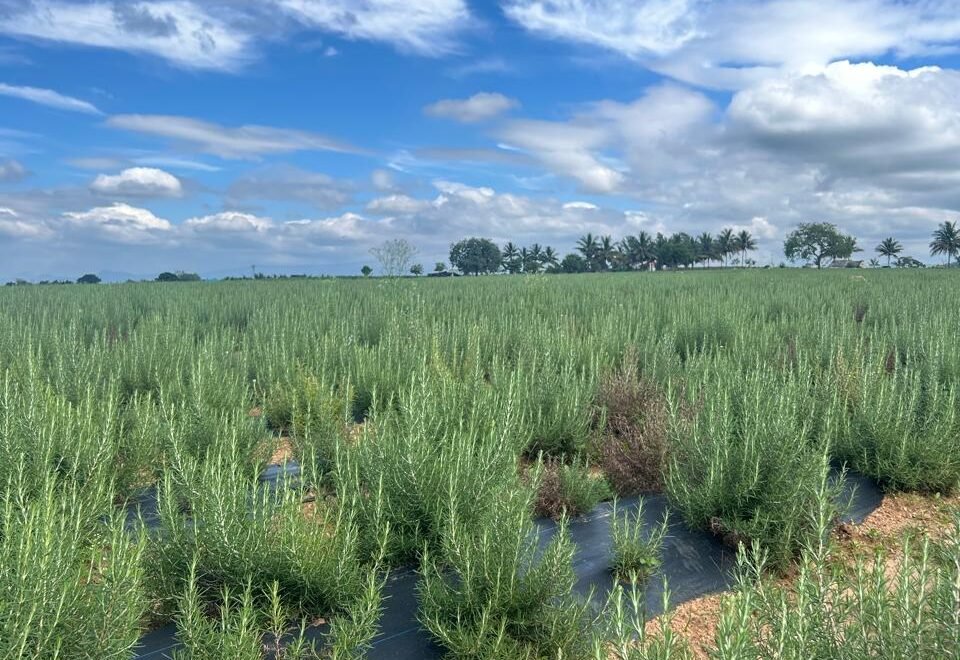
https://swastiknaturaloils.com/rosemary-leaves-india/Everything You Need to Know About Rosemary Cultivation, Quality, Applications, Essential Oil & Bulk Supply
Rosemary is far more than a fragrant culinary herb. Across the world, it has become an important botanical ingredient for the food, cosmetic, nutraceutical, pharmaceutical and essential oil industries. Its aromatic leaves, naturally occurring antioxidant compounds and remarkable versatility have made rosemary one of the most commercially valuable herbs cultivated today.
India is witnessing a growing demand for premium-quality rosemary. As manufacturers increasingly seek reliable domestic sources, commercial cultivation has expanded beyond experimental farming into organised production. This has created new opportunities for chefs, food processors, herbal ingredient manufacturers, cosmetic formulators and international buyers looking for traceable, farm-direct rosemary.
Yet despite this growing demand, finding reliable, experience-based information about rosemary in India remains surprisingly difficult. Much of the content available online is either copied from international sources or focuses only on culinary uses, offering little insight into commercial cultivation, post-harvest handling, quality standards or industrial applications.
This guide was created to bridge that gap.
Drawing on scientific research, practical cultivation knowledge and three decades of experience in India’s essential oil and botanical industry, this guide brings together everything you need to understand rosemary—from how it is grown and processed to how commercial buyers evaluate quality and source it for different industries.
Whether you’re a farmer exploring commercial cultivation, a manufacturer sourcing botanical ingredients, a chef looking for premium herbs or a business searching for a dependable bulk rosemary supplier in India, this guide is designed to provide clear, practical and experience-backed information.
What is Rosemary?
Rosemary (Salvia rosmarinus) is an evergreen aromatic shrub belonging to the mint family (Lamiaceae). Native to the Mediterranean region, it is now cultivated in several parts of the world, including India, where it is grown for its fragrant leaves, essential oil and naturally occurring antioxidant compounds such as carnosic acid and rosmarinic acid.
Commercially, rosemary is supplied as fresh rosemary, shade-dried rosemary, extraction-grade biomass and rosemary essential oil, serving industries that include food manufacturing, cosmetics, personal care, nutraceuticals, herbal extracts and aromatherapy.
Why This Guide is Different
There are thousands of articles about rosemary online.
Most explain what rosemary is.
Few explain how commercial-quality rosemary is actually produced.
Even fewer are written by businesses that cultivate rosemary, process botanical ingredients and have decades of practical experience working with aromatic plants.
At Swastik Natural Oils, rosemary is not simply a topic we write about—it’s a crop we cultivate and a botanical ingredient we work with as part of our broader expertise in essential oils and natural products.
This guide combines:
-
- Current scientific understanding
-
- Practical cultivation knowledge
-
- Commercial sourcing insights
-
- Industry applications
-
- Farm-level observations
-
- Quality and post-harvest considerations
to help readers make informed decisions, whether they are growing rosemary, buying it in bulk or incorporating it into commercial products.
Looking for a reliable rosemary supplier? Our Rosemary Leaves in India guide explains how commercial buyers evaluate quality, compare suppliers, and source rosemary in bulk.
About Swastik Natural Oils
Over 30 Years of Experience in Essential Oils & Botanical Ingredients
Swastik Natural Oils has been serving the essential oil and natural products industry for more than 30 years under the leadership of Mr. Dhiren Mehta.
Over the years, the company has developed expertise in cultivating, sourcing, processing and supplying premium botanical ingredients for a wide range of industries.
Today, our work combines:
-
- Farm-direct rosemary cultivation
-
- Botanical processing
-
- Essential oil production
-
- Bulk supply for commercial buyers
-
- Quality-focused post-harvest handling
-
- FSSAI-licensed operations for applicable products
This blend of practical farming experience and industry knowledge enables us to provide insights that extend beyond textbook information.
🌿 Experience Matters
Commercial rosemary quality begins long before harvest.
Growing conditions, harvesting stage, drying techniques, storage practices and careful processing all influence the characteristics of the final product.
Much of what you’ll read in this guide reflects principles we’ve observed through years of working with aromatic crops and supplying natural ingredients to commercial customers.
About Swastik Natural Oils
Industry Experience You Can Trust
When choosing a rosemary supplier, buyers often look beyond the product itself. They want to know who grows it, how it’s produced, and whether the supplier has the expertise to deliver consistent quality over time.
At Swastik Natural Oils, aromatic plants have been at the heart of our business for more than 30 years. Under the leadership of Mr. Dhiren Mehta, the company has built extensive experience in cultivating, processing and supplying essential oils and botanical ingredients to businesses across multiple industries.
Our approach combines scientific understanding with practical farming. Instead of relying solely on purchased raw materials, we cultivate rosemary on our own farms, oversee harvesting and post-harvest handling, distil rosemary essential oil in-house, and maintain quality-focused processes from cultivation through to dispatch.
Our operations are supported by FSSAI-licensed facilities, and for commercial buyers we provide documentation such as Certificates of Analysis (COA) and GC/GC-MS reports, where applicable, to support quality assurance and product traceability.
This guide reflects not only published scientific literature but also the practical knowledge gained from decades of working with aromatic plants in real farming conditions.
Swastik Farm Snapshot
| Attribute | Details |
|---|---|
| Company | Swastik Natural Oils |
| Industry Experience | 30+ Years |
| Founder | Mr. Dhiren Mehta |
| Rosemary Cultivation Started | April 2025 |
| Farm Location | Talavadi, Tamil Nadu |
| Total Rosemary Area | 30 Acres |
| Annual Fresh Production* | 270,000 kg – 350,000 kg Fresh |
| Monthly Production Capacity | 20,000–25,000 kg Fresh |
| Harvests Per Year | 3 |
| Harvest Team | 20–30 People |
| Essential Oil Distillation | In-house |
| Documentation | COA & GC/GC-MS Available (where applicable) |
| Regulatory | FSSAI Licensed |
Why We Chose Talavadi
Not every region is suitable for commercial rosemary cultivation. Climate, elevation, sunlight, air movement and soil conditions all influence plant growth and the quality of the harvested herb.
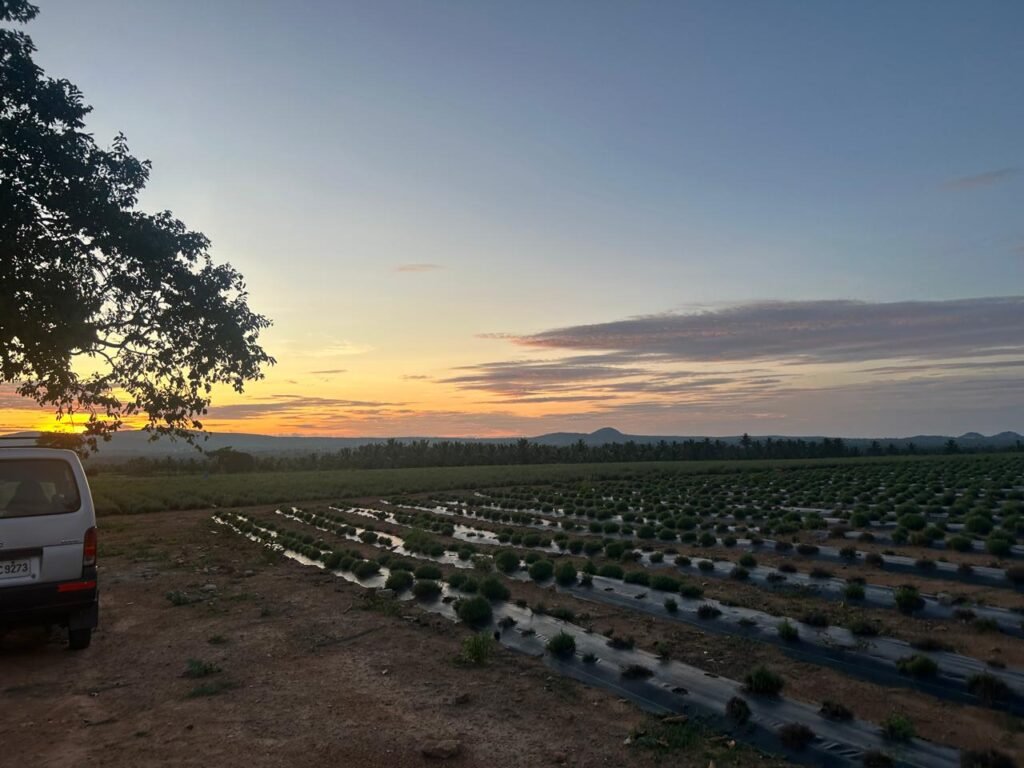
After evaluating different growing regions, we selected Talavadi, Tamil Nadu, because its elevation and climatic conditions provide an environment well suited for cultivating rosemary. The region experiences abundant sunshine, good air circulation and conditions that support healthy vegetative growth while allowing multiple harvests each year.
These environmental advantages, combined with careful crop management and timely harvesting, help us produce rosemary suitable for applications ranging from culinary herbs to botanical extraction and essential oil production.
The History of Rosemary: From the Mediterranean to Modern India
Rosemary (Salvia rosmarinus) originated in the Mediterranean Basin, where it has been cultivated for centuries as a culinary herb, medicinal plant and source of aromatic essential oil. Over time, its cultivation spread across Europe, the Americas, Australia and Asia. Today, India is emerging as an important producer of high-quality rosemary for domestic consumption and industrial applications.
A Herb with Thousands of Years of History
Long before rosemary became a commercial crop, it was a familiar presence along the rocky coastlines of the Mediterranean. The plant thrived naturally in warm, sunny environments with well-drained soils, developing the woody stems, narrow evergreen leaves and distinctive aroma that continue to define it today.
Ancient civilisations quickly recognised its value. Historical records describe rosemary being used in cooking, household rituals, perfumery and traditional herbal practices. Over the centuries, its reputation spread throughout Europe, where it became closely associated with kitchens, gardens and herbal preparations.
As global trade expanded, rosemary travelled far beyond its native range. Farmers and horticulturists introduced it into regions with climates resembling the Mediterranean, allowing cultivation to develop across multiple continents.
Why Rosemary Became a Global Crop
Rosemary’s popularity is not based on a single characteristic. It is valued because one plant can serve many industries.
Today, rosemary is commercially cultivated for:
-
- Fresh culinary herbs
-
- Dried rosemary leaves
-
- Rosemary essential oil
-
- Botanical extracts
-
- Natural antioxidants
-
- Cosmetic ingredients
-
- Herbal teas
-
- Nutraceutical formulations
-
- Fragrance applications
This versatility has driven steady global demand and encouraged cultivation in regions capable of producing high-quality plant material.
Rosemary Arrives in India
As consumer preferences shifted towards natural ingredients and domestic production expanded, rosemary found a place in Indian agriculture. Improved farming practices, increased demand from the food and personal care sectors, and the growth of the essential oil industry have all contributed to its commercial importance.
Today, rosemary is cultivated in selected regions where environmental conditions are favourable. Areas with moderate temperatures, abundant sunlight and good drainage provide the best opportunity to produce high-quality herbs suitable for fresh use, drying and essential oil extraction.
The increasing interest in botanical ingredients has also encouraged manufacturers to source rosemary within India, reducing dependence on imports while improving traceability and supply chain reliability.
Why India Is Becoming an Important Source
India offers several advantages for commercial rosemary cultivation:
-
- Diverse agro-climatic zones suitable for aromatic crops.
-
- Growing domestic demand from food, wellness and cosmetic industries.
-
- An established essential oil sector with expertise in cultivation and distillation.
-
- Increasing investment in medicinal and aromatic plants.
-
- Access to skilled agricultural labour and year-round production opportunities in suitable regions.
As quality standards continue to improve, Indian-grown rosemary is becoming an increasingly attractive option for both domestic buyers and export markets.
While rosemary originated in the Mediterranean, careful site selection allows it to thrive in parts of India where climatic conditions closely resemble its native environment. Regions with suitable elevation, sunshine and well-drained soils can produce rosemary that meets demanding commercial requirements.
Understanding Rosemary: Botanical Profile, Plant Structure & Natural Chemistry
Rosemary (Salvia rosmarinus) is a perennial evergreen shrub belonging to the mint family (Lamiaceae). It is valued for its needle-like aromatic leaves, woody stems and naturally occurring compounds such as carnosic acid, rosmarinic acid and essential oil constituents. These characteristics make rosemary one of the world’s most commercially important aromatic herbs, used across culinary, cosmetic, pharmaceutical and botanical industries.
What Exactly is Rosemary?
To most people, rosemary is simply a fragrant herb used in cooking.
To farmers, it is a high-value aromatic crop.
To cosmetic manufacturers, it is a botanical ingredient.
To essential oil distillers, it is a source of aromatic volatile compounds.
To nutraceutical companies, it is valued for its naturally occurring antioxidant compounds.
The same plant serves completely different purposes depending on how it is cultivated, harvested and processed.
That versatility is one of the main reasons rosemary has become one of the fastest-growing aromatic herbs in commercial agriculture.
Botanical Classification
| Classification | Details |
|---|---|
| Scientific Name | Salvia rosmarinus |
| Former Botanical Name | Rosmarinus officinalis |
| Family | Lamiaceae |
| Common Name | Rosemary |
| Plant Type | Evergreen Aromatic Shrub |
| Native Region | Mediterranean Basin |
| Life Cycle | Perennial |
| Commercial Life | 3 – 7 years under proper management (varies with growing conditions) |
🌿 Did You Know?
Until 2017, rosemary was scientifically known as Rosmarinus officinalis. Following advances in botanical research, it was reclassified into the genus Salvia, and its accepted scientific name is now Salvia rosmarinus. However, many scientific publications, suppliers and buyers still use the older name because of its long history in research and commerce.
Plant Anatomy
Understanding the structure of the rosemary plant helps explain why it is valued across so many industries.
Each part of the plant contributes differently to its commercial applications.
Leaves
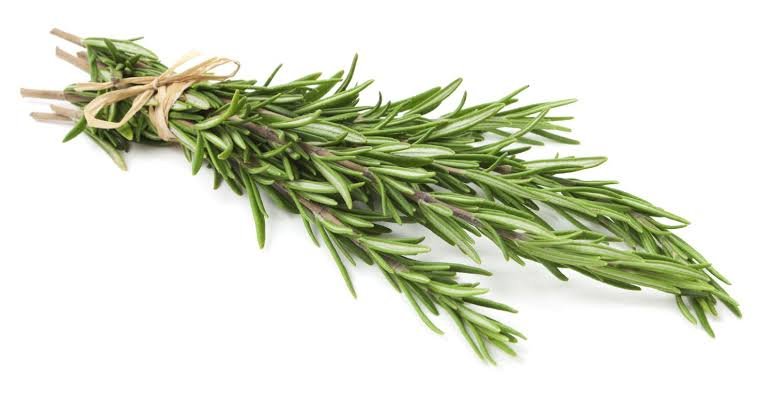
The narrow, evergreen leaves are the most commercially valuable part of the plant.
They contain aromatic glands that produce essential oils and naturally occurring antioxidant compounds.
Premium-quality leaves typically exhibit:
-
- Deep green colour
-
- Strong characteristic aroma
-
- Low foreign matter
-
- Minimal stem content
-
- Good leaf integrity after drying
Fresh leaves are supplied to the culinary market, while dried leavesare widely used in seasoning blends, herbal products and botanical extraction.

Stems
The woody stems provide structural support throughout the plant’s life.
Although stems contain lower concentrations of aromatic compounds than leaves, they are still utilised in certain extraction processes and biomass applications.
Commercial processors often grade rosemary according to the proportion of leaves and stems present in the harvested material.
Flowers
Rosemary produces delicate flowers that vary from pale blue to violet, depending on the variety and growing conditions.
While the flowers are attractive to pollinators such as bees, commercial harvesting is generally timed before extensive flowering when the intended application prioritises leafy biomass or specific quality characteristics.
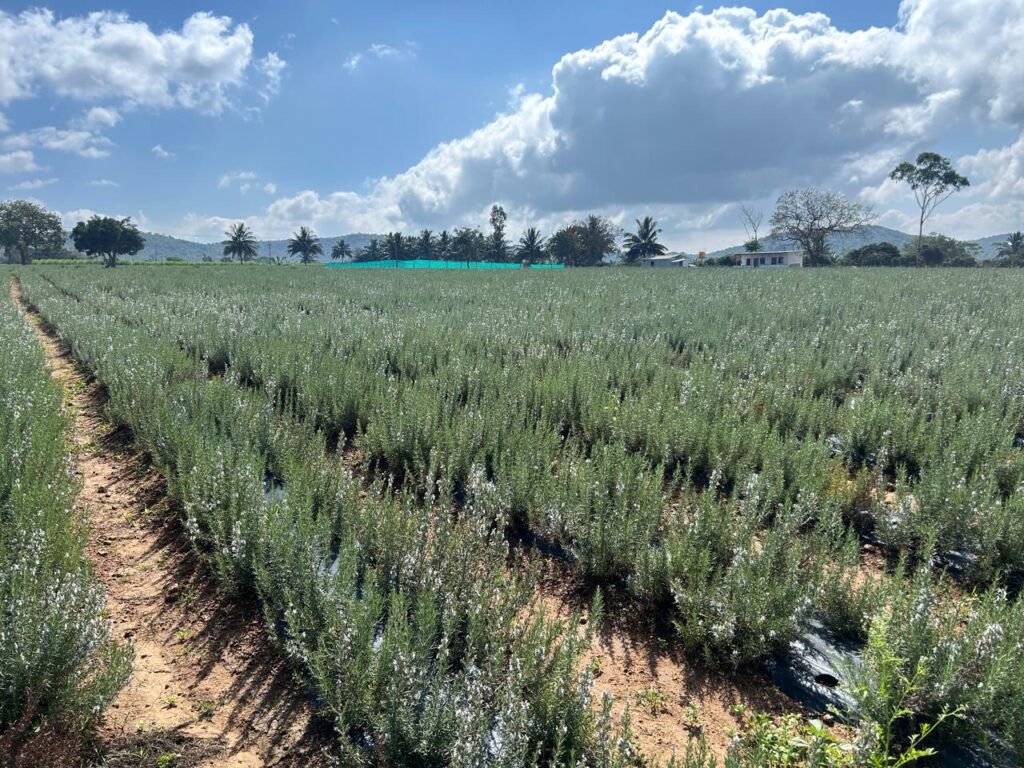
We usually harvest around 10 – 14 days before the flowering starts.
Root System
Rosemary develops a well-branched root system that enables it to tolerate relatively dry conditions once established.
Healthy roots are essential for:
-
- Nutrient uptake
-
- Water absorption
-
- Long-term productivity
-
- Multiple harvest cycles
Proper soil drainage is particularly important, as prolonged waterlogging can reduce plant health and productivity.
Why Does Rosemary Smell So Distinctive?
One of rosemary’s defining characteristics is its fresh, herbaceous aroma.
This fragrance comes from naturally occurring volatile compounds produced within specialised oil glands in the leaves.
The exact composition varies depending on factors such as:
-
- Variety
-
- Climate
-
- Soil
-
- Harvest timing
-
- Drying method
-
- Distillation practices
Because these factors influence aroma and quality, experienced growers pay close attention to cultivation and post-harvest handling rather than treating all rosemary as identical.
The Science Behind Rosemary’s Value
Rosemary’s commercial importance extends well beyond its aroma.
Researchers have identified numerous naturally occurring compounds that contribute to its unique properties.
Among the best studied are:
Carnosic Acid
A naturally occurring phenolic diterpene found primarily in rosemary leaves.
It has attracted scientific interest because of its antioxidant properties and its role in preserving the stability of plant tissues.
Commercial buyers often evaluate rosemary intended for extraction based partly on its carnosic acid content.
Rosmarinic Acid
Another naturally occurring polyphenolic compound present in rosemary.
It contributes to the plant’s antioxidant profile and has become an important subject of research within food science and botanical studies.
Essential Oil Constituents
Rosemary essential oil contains a complex mixture of naturally occurring aromatic molecules.
The composition varies depending on chemotype, geography and cultivation practices but commonly includes compounds such as:
-
- 1,8-Cineole
-
- Camphor
-
- α-Pinene
-
- Borneol
-
- Verbenone (in specific chemotypes)
The balance of these constituents influences aroma and suitability for different commercial applications.
From Farm to Finished Ingredient
A rosemary plant does not become a premium commercial ingredient simply because it is harvested.
Its quality is influenced by every stage of production:
-
- Variety selection
-
- Climate
-
- Soil conditions
-
- Irrigation
-
- Harvest timing
-
- Post-harvest handling
-
- Drying method
-
- Cleaning
-
- Grading
-
- Packaging
-
- Storage
Each step affects the final characteristics of the herb, including aroma, appearance and suitability for different industries.
Swastik Farm Insight
Our Cultivation Approach
At Swastik Natural Oils, our rosemary journey began in April 2025 with the vision of cultivating premium-quality rosemary under conditions that closely match the plant’s natural growing requirements. After evaluating different regions, we selected Talavadi, Tamil Nadu, where the elevation, climate and well-drained soils provide an ideal environment for commercial rosemary cultivation.
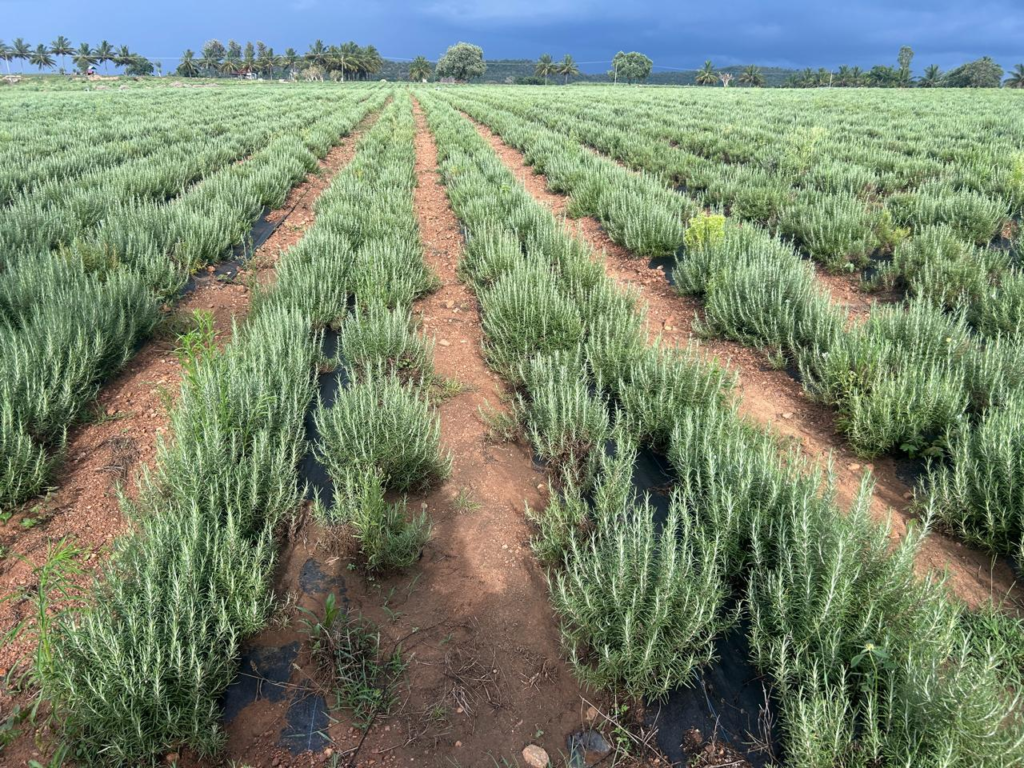
Today, our 30-acre farm produces approximately 270 metric tonnes (270,000 kg) of fresh rosemary annually, with an average monthly production capacity of 20–25 metric tonnes. The crop is harvested three times a year, and during peak harvest season, a dedicated team of 20–30 skilled workers manages harvesting and post-harvest operations.
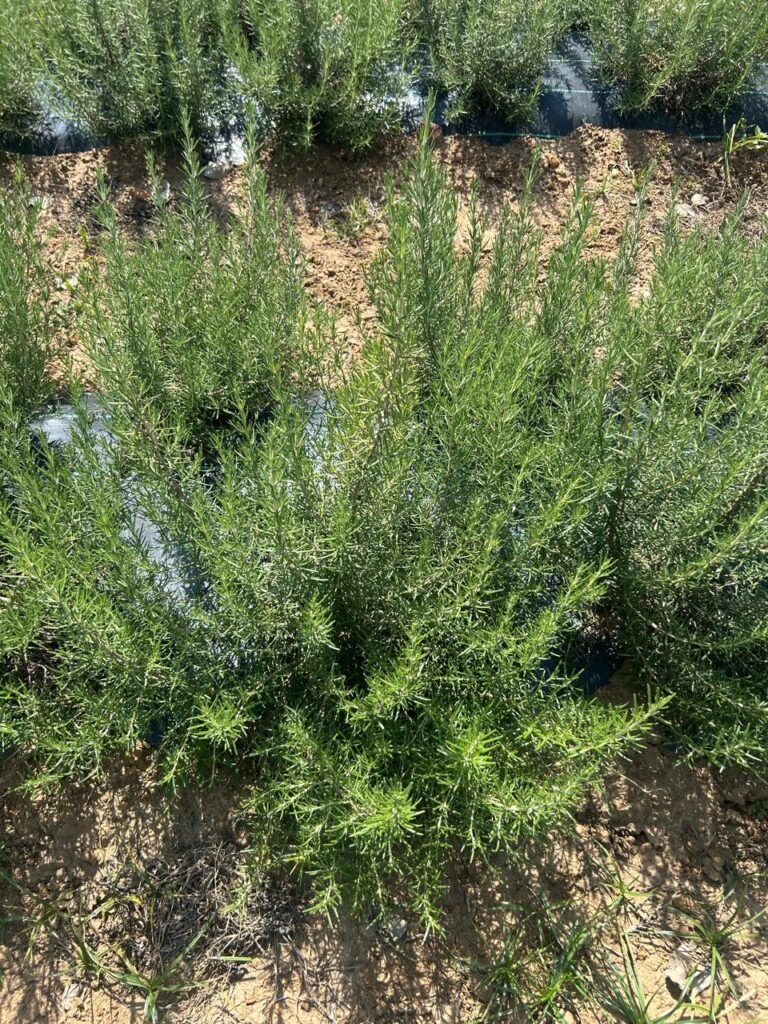
We cultivate Rosmarinus officinalis (currently classified as Salvia rosmarinus) using a 1 ft × 1 ft planting density and a drip irrigation system, ensuring efficient water management and uniform plant growth. The first commercial harvest is typically obtained 4–6 months after planting, after which the plants are pruned after every harvest to encourage vigorous regrowth and maintain long-term productivity.
In addition to supplying fresh and dried rosemary, we also distil rosemary essential oil in-house, allowing us to maintain greater control over quality from cultivation through to finished product. Our operations are supported by FSSAI-licensed facilities, and we can provide Certificates of Analysis (COA) and GC/GC-MS reports, where applicable, to support customer quality requirements.
Expert Insight
“Successful rosemary cultivation is not just about growing the plant. Consistent quality depends on choosing the right location, harvesting at the appropriate stage, careful post-harvest handling and maintaining quality throughout the supply chain.”
— Dhiren Mehta, Founder, Swastik Natural Oils
Rosemary Cultivation in India: Climate, Soil & Growing Conditions
Rosemary grows best in regions with abundant sunshine, well-drained soil, good air circulation and moderate rainfall. Although native to the Mediterranean, it can be successfully cultivated in parts of India where climatic conditions are similar. When grown under suitable conditions and managed carefully, rosemary can support multiple harvests each year while maintaining excellent aroma and overall quality.
Why Climate Matters
Every aromatic plant reflects the environment in which it is grown.
For rosemary, climate influences much more than plant growth—it affects leaf development, aroma, essential oil composition and overall product quality.
The best commercial crops are typically produced in regions that offer:
-
- Plenty of sunlight
-
- Well-drained soils
-
- Good airflow
-
- Moderate temperatures
-
- Low waterlogging risk
When these conditions are combined with proper crop management, rosemary develops healthy foliage suitable for fresh herbs, drying and essential oil production.
Why We Chose Talavadi
Selecting the right location was one of the most important decisions in establishing our rosemary farm.
We chose Talavadi, Tamil Nadu, because its elevation, favourable climate and natural growing conditions closely suit the needs of rosemary. The region receives abundant sunlight, experiences good air movement and offers soils that support healthy root development and efficient drainage.
These conditions allow us to cultivate rosemary with consistent growth while harvesting the crop three times each year.
Soil Requirements
Healthy roots are the foundation of every productive rosemary plant.
Rosemary performs best in well-drained sandy loam to loamy soils with good aeration, avoid black clay soil. Poor drainage can stress the plant and reduce long-term productivity, making soil preparation one of the most important stages before planting.
At our farm, careful land preparation and drip irrigation help maintain favourable growing conditions while avoiding excessive moisture around the root zone.
Irrigation & Crop Management
Although rosemary becomes relatively drought tolerant after establishment, young plants require consistent moisture to develop a strong root system.
At Swastik Natural Oils, we use a drip irrigation system, allowing water to be delivered directly to the root zone while reducing wastage and maintaining uniform crop growth.
Plants are established at a spacing of 1 ft × 1 ft, enabling efficient land utilisation and easier field management.
The first commercial harvest is generally achieved 4–6 months after planting, after which the plants are pruned after every harvest to encourage vigorous regrowth and maintain productivity.
Harvest Timing Makes a Difference
Growing rosemary is only part of the process.
Harvesting at the right stage plays an important role in determining the appearance, aroma and suitability of the harvested material for different applications.
Rather than allowing plants to become overgrown, commercial growers schedule harvesting based on crop maturity and intended end use. Careful post-harvest handling then helps preserve leaf quality before drying or distillation.
“Consistency is built through discipline. The same field can produce very different results depending on when it is harvested and how the crop is handled immediately afterwards.”
Harvesting & Post-Harvest Processing: Preserving Quality from Field to Finished Product
The quality of rosemary depends not only on how it is grown but also on when it is harvested and how it is handled afterwards. Proper harvesting, careful drying and hygienic processing help preserve aroma, leaf integrity and the plant’s naturally occurring compounds.
Harvesting at the Right Stage
Harvest timing plays an important role in determining the overall quality of rosemary. Plants harvested too early may not have reached their full aromatic potential, while over-mature plants can develop a higher proportion of woody stems and reduced leaf quality.
At Swastik Natural Oils, rosemary reaches its first commercial harvest within 4–6 months of planting. Under favourable growing conditions, the crop is harvested three times each year. After every harvest, the plants are carefully pruned to encourage healthy regrowth, ensuring consistent production across future harvest cycles.
Post-Harvest Handling
Freshly harvested rosemary is highly aromatic but also delicate. The period immediately after harvest is critical to maintaining its quality.
Once harvested, the crop is:
-
- Carefully collected to minimise damage.
-
- Transported promptly for further processing.
-
- Sorted to remove unwanted material.
-
- Prepared for drying or distillation depending on its intended use.
Efficient post-harvest handling helps preserve freshness and reduces unnecessary handling that could affect leaf quality.
Drying & Processing
Drying is one of the most important stages in rosemary processing. Proper drying helps reduce moisture while retaining the herb’s natural aroma, colour and overall quality.
Depending on the intended application, rosemary may be supplied as:
-
- Fresh rosemary
-
- Whole dried leaves
-
- Cut & sift rosemary
-
- Extraction-grade rosemary
-
- Material for essential oil distillation
After drying, the material is cleaned, graded and packed under controlled conditions before dispatch.
Buyer Tip
Premium rosemary should have a pleasant natural aroma, good leaf integrity, minimal foreign matter and appropriate moisture levels for storage.
Fresh vs Dried Rosemary: Which One is Right for Your Application?
Fresh and dried rosemary are produced from the same plant but serve different commercial purposes. Fresh rosemary offers vibrant aroma and appearance, while dried rosemary provides a longer shelf life, easier storage and greater convenience for industrial applications.
| Fresh Rosemary | Dried Rosemary |
|---|---|
| Bright green appearance | Reduced moisture for longer storage |
| Highly aromatic | Concentrated flavour and aroma |
| Short shelf life | Extended shelf life |
| Used by restaurants and fresh food manufacturers | Used in seasonings, food processing, herbal products and botanical extraction |
Fresh rosemary is commonly supplied to:
-
- Restaurants
-
- Hotels
-
- Fresh food processors
-
- Premium retailers
Dried rosemary is widely used by:
-
- Food manufacturers
-
- Spice companies
-
- Cosmetic manufacturers
-
- Nutraceutical companies
-
- Botanical extract producers
At Swastik Natural Oils, we supply both fresh and dried rosemary depending on customer requirements.
For a detailed comparison, read our complete guide to Fresh vs Dried Rosemary.
Rosemary Essential Oil: From Field to Distillation
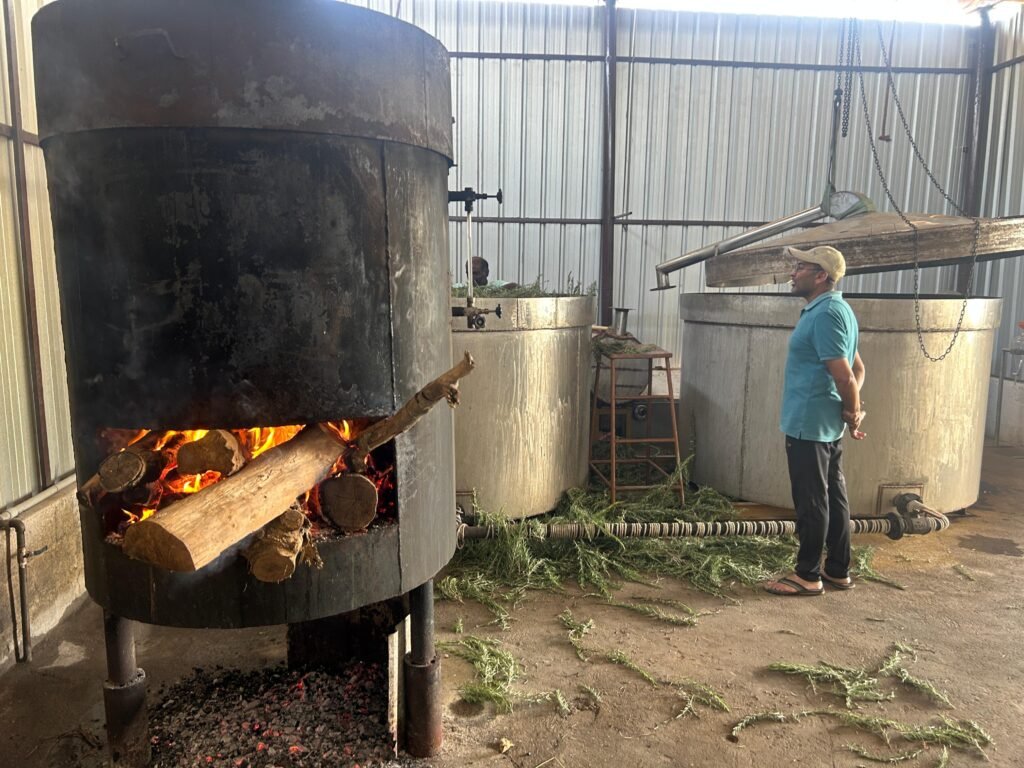
Rosemary essential oil is obtained through steam distillation of rosemary biomass. The resulting oil is valued across aromatherapy, personal care, cosmetics, wellness and fragrance applications for its characteristic fresh, herbaceous aroma.
From Plant to Essential Oil
Essential oil production begins long before the distillation process. The quality of the final oil is influenced by:
-
- Plant health
-
- Growing conditions
-
- Harvest timing
-
- Biomass quality
-
- Distillation practices
At Swastik Natural Oils, rosemary is cultivated on our own farm before being distilled in-house, allowing greater control over the production process from cultivation through to finished oil.
This farm-to-distillation approach supports consistency and traceability throughout the supply chain.
Applications of Rosemary Essential Oil
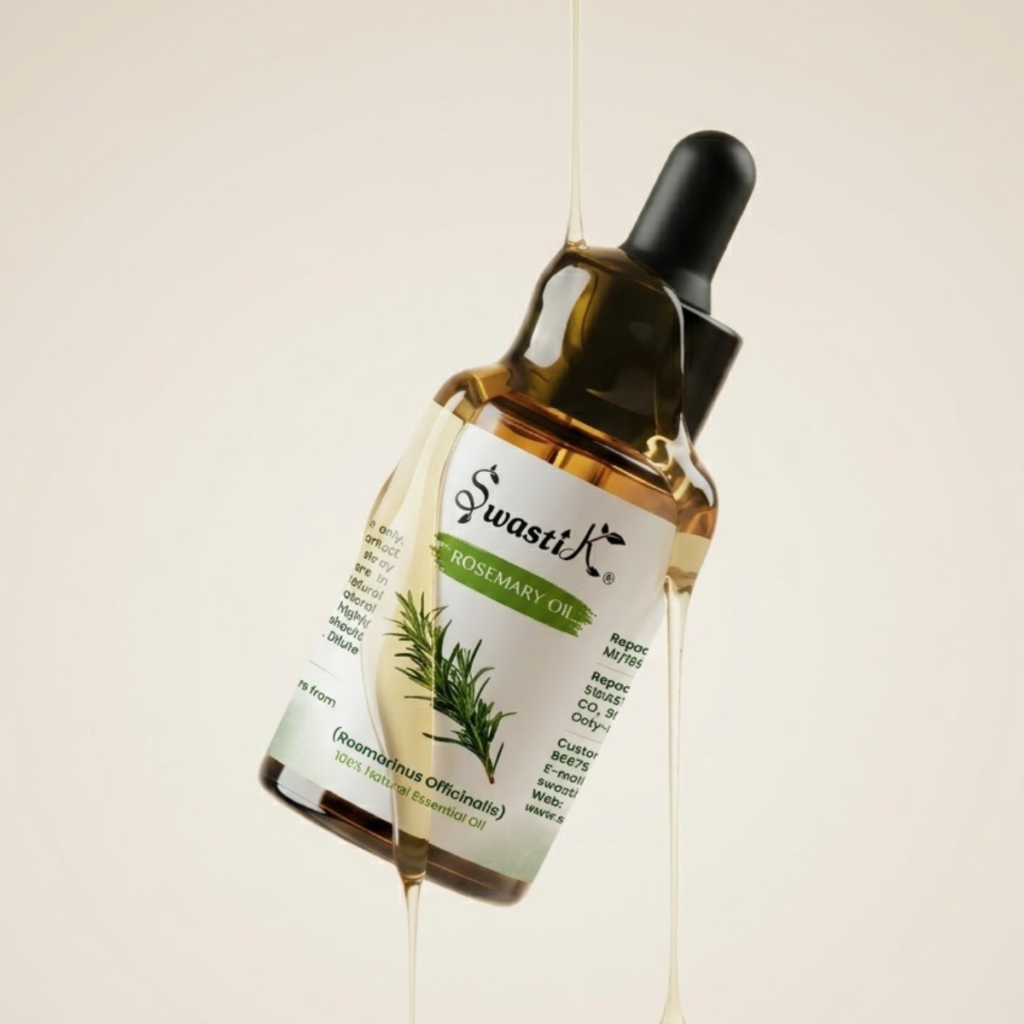
Rosemary essential oil is widely used in:
-
- Aromatherapy
-
- Hair care formulations
-
- Skin care products
-
- Massage oils
-
- Natural fragrances
-
- Personal care products
-
- Wellness blends
The oil’s fresh, herbaceous aroma has made it one of the most widely recognised essential oils in the natural products industry.
🔵 Expert Insight – Dhiren Mehta
“High-quality essential oil starts with high-quality plant material. Cultivation, harvesting and distillation should be viewed as one continuous process rather than separate stages.”
Quality & Documentation
Commercial buyers increasingly expect transparency and technical documentation when sourcing botanical ingredients.
Where applicable, Swastik Natural Oils can provide:
-
- Certificate of Analysis (COA)
-
- GC/GC-MS reports
-
- Product specifications
-
- Batch traceability
-
- FSSAI certification
These documents help buyers evaluate products according to their own quality standards and intended applications.
Industrial Applications of Rosemary
Rosemary is one of the world’s most versatile aromatic herbs. It is used across the food, cosmetic, nutraceutical, pharmaceutical, wellness and essential oil industries due to its distinctive aroma, naturally occurring phytochemicals and wide range of commercial applications.
A Herb That Serves Multiple Industries
One of rosemary’s greatest strengths is its versatility. Unlike many herbs that are limited to culinary use, rosemary is valued by a wide range of industries, each using different parts of the plant depending on its application.
This broad commercial demand has made rosemary an increasingly important crop for growers and processors worldwide.
Food Industry
Fresh and dried rosemary are widely used as flavouring ingredients in:
-
- Seasoning blends
-
- Marinades
-
- Sauces
-
- Bakery products
-
- Meat processing
-
- Gourmet foods
-
- Herbal teas
Its distinctive aroma and flavour make it a popular ingredient in both traditional and modern food products.
Cosmetics & Personal Care
Rosemary is also a valuable ingredient in cosmetic and personal care formulations.
Common applications include:
-
- Hair oils
-
- Shampoos
-
- Conditioners
-
- Face care
-
- Body care
-
- Massage oils
-
- Soaps
Both dried rosemary and rosemary essential oil are used depending on the product formulation.
Nutraceutical & Botanical Extract Industry
Rosemary has attracted growing interest from nutraceutical and botanical extract manufacturers because of its naturally occurring compounds, particularly carnosic acid and rosmarinic acid.
Rosemary biomass is commonly used for botanical extraction, where these compounds are isolated for specialised applications.
As consumer demand for plant-based ingredients continues to grow, rosemary has become an increasingly valuable raw material for this sector.
Essential Oil Industry
High-quality rosemary biomass is also used for steam distillation to produce rosemary essential oil.
The oil is widely incorporated into:
-
- Aromatherapy blends
-
- Wellness products
-
- Natural fragrances
-
- Hair care
-
- Massage formulations
At Swastik Natural Oils, rosemary is cultivated and distilled in-house, allowing greater control over the process from cultivation to finished oil.
Industries We Supply
Swastik Natural Oils supplies rosemary for a wide range of commercial applications, including:
✓ Food manufacturers
✓ Cosmetic manufacturers
✓ Essential oil companies
✓ Herbal product manufacturers
✓ Nutraceutical companies
✓ Botanical extract manufacturers
✓ Bulk ingredient distributors
✓ Export buyers
How to Identify High-Quality Rosemary
High-quality rosemary should be evaluated using a combination of appearance, aroma, cleanliness, moisture, traceability and technical documentation. Colour alone is not a reliable indicator of quality.
What Commercial Buyers Look For
Professional buyers evaluate several quality parameters before selecting a supplier.
Aroma
Premium rosemary should have a fresh, clean and characteristic herbal aroma.
A weak or stale smell may indicate improper storage or ageing.
Leaf Integrity
A higher proportion of intact leaves generally indicates better handling during harvesting and processing.
Excessive broken leaves or woody stems may reduce suitability for certain applications.
Colour
Fresh rosemary should display healthy green foliage.
Dried rosemary should retain a natural green appearance appropriate for its processing method.
However, colour should always be assessed alongside other quality indicators.
Cleanliness
Commercial rosemary should be free from:
-
- Stones
-
- Dust
-
- Excess stems
-
- Foreign plant material
-
- Visible contamination
Moisture
Appropriate moisture levels are important for maintaining product stability during storage.
Proper drying and packaging help preserve quality throughout the supply chain.
Technical Documentation
For industrial buyers, documentation is often as important as the product itself.
Depending on customer requirements, suppliers may provide:
-
- Certificate of Analysis (COA)
-
- GC/GC-MS reports
-
- Product specifications
-
- Batch traceability
-
- FSSAI Certification
Why Traceability Matters
Businesses increasingly want to know where their ingredients come from.
Farm-direct sourcing provides greater transparency throughout the production process, allowing buyers to better understand cultivation practices and product origin.
This is becoming increasingly important across food, cosmetic and nutraceutical industries.
Why Choose Swastik Natural Oils
Choosing a rosemary supplier is about more than purchasing a product—it’s about establishing a reliable partnership built on consistency, transparency and long-term trust.
With over 30 years of experience in essential oils and botanical ingredients, Swastik Natural Oils combines practical farming knowledge with commercial manufacturing expertise.
Unlike businesses that simply trade raw materials, we are directly involved in every stage of production—from cultivation and harvesting to processing and in-house distillation.
What Sets Us Apart
Farm-Direct Cultivation
30 acres of rosemary cultivated in Talavadi, Tamil Nadu, under favourable climatic conditions.
In-House Distillation
Greater control over quality through our own rosemary essential oil distillation process.
Quality Documentation
COA, GC/GC-MS reports and product specifications available where applicable.
30+ Years of Industry Experience
Led by Mr. Dhiren Mehta, whose three decades of experience in essential oils and botanicals guide our cultivation, processing and quality practices.
FSSAI Licensed
Our operations comply with applicable food safety requirements, providing added confidence for customers requiring regulated products.
Long-Term Partnerships
We work with businesses across multiple industries, supplying rosemary for food, cosmetic, essential oil, nutraceutical and botanical applications.
Our Supply Process
-
- Understand your application.
-
- Recommend the appropriate rosemary product.
-
- Share specifications and pricing.
-
- Provide samples where required.
-
- Process and dispatch your order.
-
- Support long-term supply requirements.
🟢 Farm Insight
Every batch of rosemary reflects months of cultivation, careful harvesting and quality-focused processing. By managing these stages ourselves, we aim to provide products that meet the expectations of commercial buyers while maintaining consistency across harvests.
Looking Ahead
As demand for natural ingredients continues to grow, businesses increasingly seek suppliers who offer more than competitive pricing. They look for dependable partners with cultivation expertise, transparent processes and a commitment to consistent quality.
At Swastik Natural Oils, our goal is to build lasting relationships by combining farm-direct cultivation, in-house processing and over three decades of botanical expertise to serve customers across India and international markets.
Frequently Asked Questions (FAQs)
Rosemary (Salvia rosmarinus), formerly known as Rosmarinus officinalis, is an evergreen aromatic shrub belonging to the mint family (Lamiaceae). It is widely cultivated for its fragrant leaves, essential oil and applications in the food, cosmetic, nutraceutical and wellness industries.
Yes. Rosemary can be successfully cultivated in several parts of India where climatic conditions are suitable. Regions with good sunlight, well-drained soil and favourable elevation provide ideal growing conditions for commercial rosemary cultivation.
Our rosemary is cultivated on our 30-acre farm in Talavadi, Tamil Nadu, a region selected for its favourable climate, elevation and growing conditions.
Under suitable growing conditions, rosemary can be harvested multiple times annually. At our farm, we typically harvest the crop three times each year, followed by pruning to encourage healthy regrowth.
Rosemary generally reaches its first commercial harvest 4–6 months after planting, depending on climate, cultivation practices and overall plant development.
Fresh rosemary is preferred for culinary applications where appearance and fresh aroma are important. Dried rosemary has a longer shelf life and is commonly used by food manufacturers, spice companies, cosmetic brands and botanical extract manufacturers.
👉 Read More: Fresh vs Dried Rosemary
Rosemary is widely used in:
-
- Food manufacturing
-
- Spice blends
-
- Herbal teas
-
- Cosmetics
-
- Hair care
-
- Personal care
-
- Aromatherapy
-
- Nutraceuticals
-
- Botanical extracts
-
- Essential oil production
Rosemary essential oil is obtained through steam distillation of rosemary biomass. It is widely used in aromatherapy, hair care, massage blends, personal care products and natural fragrances.
Yes. At Swastik Natural Oils, rosemary is cultivated on our own farm and distilled in-house, allowing us to maintain greater control over quality and traceability.
Carnosic acid is a naturally occurring antioxidant compound found in rosemary. It is one of the key phytochemicals studied for its role in the plant’s natural defence system and its commercial importance in botanical extracts.
Rosmarinic acid is another naturally occurring polyphenolic compound present in rosemary and other members of the mint family. It contributes to rosemary’s antioxidant profile and has been widely studied in botanical research.
Yes. We supply rosemary in bulk for food manufacturers, cosmetic companies, nutraceutical businesses, herbal product manufacturers and other commercial buyers.
We offer:
-
- Fresh Rosemary
-
- Dried Rosemary
-
- Rosemary Essential Oil
-
- Bulk Rosemary
-
- Industrial Supply
Yes. Depending on the product and customer requirements, we can provide:
-
- Certificate of Analysis (COA)
-
- GC/GC-MS Reports
-
- Product Specifications
Yes. Swastik Natural Oils operates FSSAI-licensed facilities for applicable products, supporting quality and regulatory compliance.
Yes. Samples can be provided for commercial evaluation, subject to product availability and enquiry requirements.
Farm-direct suppliers provide greater transparency, better traceability and improved control over cultivation, harvesting and processing compared to businesses that only trade raw materials.
Dried rosemary should be stored in a cool, dry place away from direct sunlight and excess moisture, preferably in airtight packaging to preserve aroma and quality.
Simply contact our team with your product requirements, estimated quantity and intended application. We’ll recommend the most suitable rosemary product and share specifications, pricing and sample options where applicable.
Why Swastik Natural Oils?
Choosing the right rosemary supplier is about more than finding a competitive price. It is about partnering with a company that understands cultivation, quality, consistency and the needs of commercial buyers.
At Swastik Natural Oils, every stage of production—from cultivating rosemary on our 30-acre farm in Talavadi to harvesting, processing and in-house distillation—is managed with care and attention to detail. Backed by more than 30 years of industry experience under the leadership of Mr. Dhiren Mehta, we combine practical farming knowledge with technical expertise to deliver products that meet the expectations of food manufacturers, cosmetic brands, nutraceutical companies and essential oil businesses.
Our commitment to quality is supported by FSSAI-licensed operations, technical documentation such as COA and GC/GC-MS reports (where applicable), and a focus on building long-term partnerships rather than one-time transactions.
Whether you require fresh rosemary, dried rosemary or rosemary essential oil, our team is ready to help you find the right solution for your application.
Request Pricing, Samples or Technical Information
If you are looking for a trusted rosemary supplier in India, we’d be happy to discuss your requirements.
We can help you with:
✅ Fresh Rosemary
✅ Dried Rosemary
✅ Rosemary Essential Oil
✅ Bulk & Wholesale Supply
✅ COA & GC/GC-MS Documentation
✅ Samples for Commercial Evaluation✅ Product Specifications
✅ Custom Packaging Solutions
✅ Long-Term Supply Partnerships
Contact Us
Phone: +91 7397611360
Email: swastikooty@gmail.com
Website: www.swastiknaturaloils.com
📍 Farm Location: Talavadi, Tamil Nadu, India
Whether you’re a food manufacturer, cosmetic brand, herbal product company or ingredient distributor, we’ll help you source rosemary with confidence.
About the Author
Dhiren Mehta is the Founder of Swastik Natural Oils and has over 30 years of experience in the cultivation, sourcing, distillation and supply of essential oils and botanical ingredients. His work spans aromatic crops, medicinal plants and natural wellness products, with a focus on quality, traceability and sustainable sourcing.

8 thoughts on “The Ultimate Guide to Rosemary in India”